Bávaro real estate, read from the ground up
Search for Bávaro real estate and the results are prices and floor plans. Underneath every one of those listings sit four things no brochure is about: the local authority that decides what may be built, the company that supplies the power, the system that brings the water, and a strip of shoreline nobody can own. This guide reads the Bávaro property market from that layer up, from the site of Secret Garden in Los Corales, and ends with the questions that turn each layer into a document you can ask to see.
Bávaro is an address, not a town hall
Bávaro is the name buyers, airlines and hotels use for this stretch of coast, but it is not a municipality and has no council of its own. Bávaro, Los Corales included, sits inside the Distrito Municipal Verón-Punta Cana, which belongs to the municipality of Higüey in La Altagracia province. The district was created by Ley 386-06 in October 2006, and the law itself called it the country's first tourist municipal district.
That arrangement may change. A bill to turn the district into a municipality in its own right passed the Senate in 2025 and then expired in Congress without becoming law; on 15 September 2026 deputies spoke in favour of reviving the idea. For a buyer, a change of municipal category would alter which local office issues a permit or collects a local charge. It would not touch a title: ownership is recorded at the national property registry, whatever the town hall happens to be called.
Who decides what may be built on a Bávaro lot
Since January 2026 the answer is local. A resolution of the Ministry of the Presidency authorised Verón-Punta Cana to manage and authorise land use inside its own boundaries, under Ley 368-22 on territorial ordering, land use and human settlements, promulgated in December 2022. It settled a dispute with the wider municipality of Higüey over which of the two could run a planning office and issue building permits here.
The district's urban-planning department describes the sequence plainly: no construction should begin without first going through the ayuntamiento. It opens with a land-use consultation that checks the type of project is compatible with the zone; the plans are then submitted and the fees paid. National layers sit on top of that, among them an environmental authorisation from the Ministry of Environment, which the CONFOTUR council also asks to see before it gives a tourism project its definitive classification.
For a buyer, all of this adds up to a paper trail. A development in Bávaro should be able to show where each of its approvals came from, and your own attorney is the right person to read them. None of it is visible in a rendering.

Power comes from a private utility, not the state distributors
Across most of the Dominican Republic, households buy electricity from state-owned distribution companies. Bávaro does not. Its supplier is CEPM, the Consorcio Energético Punta Cana-Macao, created in 1992 by a group of international investors specifically to give the Bávaro and Punta Cana tourist zones a reliable supply. It generates, distributes and sells electricity itself, and names Punta Cana, Bávaro, Verón, Macao, Uvero Alto, Miches, Bayahíbe and La Romana as its concession area. By its own count it serves more than 80,000 residential and business customers.
The practical consequence for an owner is a single counterparty. The electricity contract for a home in Bávaro is signed with CEPM, online or at its Bávaro commercial office, and the account sits in the owner's name or with whoever runs the home day to day. Ask at purchase how the residence will be metered and who is expected to hold the supply contract once the keys are handed over.
Water and wastewater: the public network is still at tender
Water is the layer that most often surprises buyers from North America. INAPA, the national water authority, describes Verón-Punta Cana as lacking a structured public drinking-water system: supply depends on private wells, water trucks and cisterns, at high cost and with no guarantee of quality. It describes wastewater the same way, with no adequate sewer network and septic systems doing the work instead.
The state is now moving to close that gap. INAPA's water, sanitation and reuse programme for the district, prepared with the Inter-American Development Bank, is valued at US$400 million and covers a well field, a sewer network, wastewater treatment and the reuse of treated water for Arena Gorda, Cortecito, Bávaro, Cabeza de Toro and Punta Cana. Bidders' proposals are due on 12 October 2026. A tender is not a finished pipe, so no street in Bávaro should yet be assumed connected on any particular date.
Until the network exists, each community answers the question for itself. That makes it one of the most useful things a Bávaro buyer can ask: where does this community's water come from, how is it treated, where does its wastewater go, and how is all of that paid for?
Five questions that turn Bávaro's layers into documents
Each layer above has an authority, and each authority produces paper. The table pairs every question with the body that answers it and the document worth asking for. It applies to any purchase on this coast, ours included.
| Question | Who answers it | What to ask to see |
|---|---|---|
| May this building stand here? | The Verón-Punta Cana district, under Ley 368-22 | The land-use approval and the building permit |
| Has the environment ministry signed off? | The Ministry of Environment | The project's environmental authorisation |
| Who supplies the power? | CEPM, the private utility | How the unit will be metered and who holds the contract |
| Where does the water come from? | The developer, until INAPA's network is built | The water source, its treatment and where wastewater goes |
| Is the beach in front private? | No one: the shoreline strip is public by law | The distance from the property line to the sand |
Where Secret Garden sits on that map
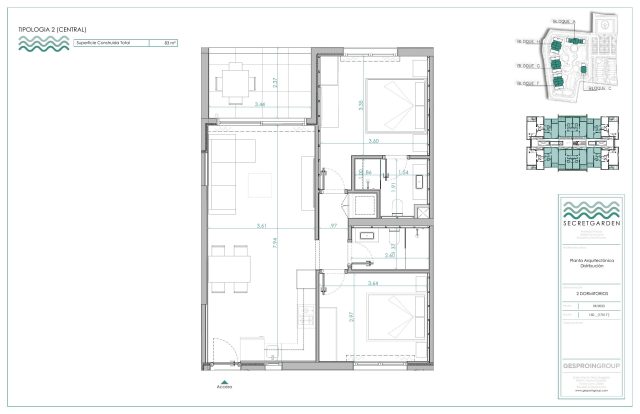
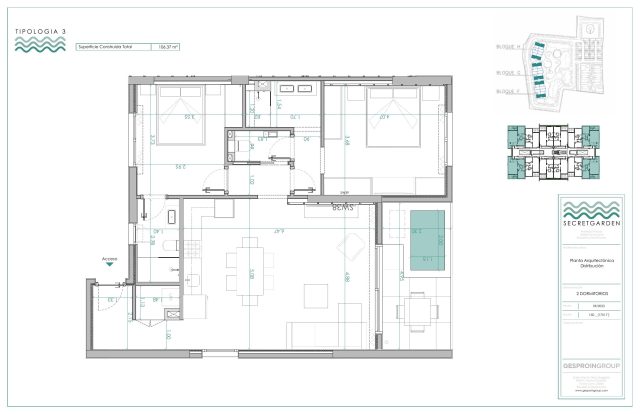
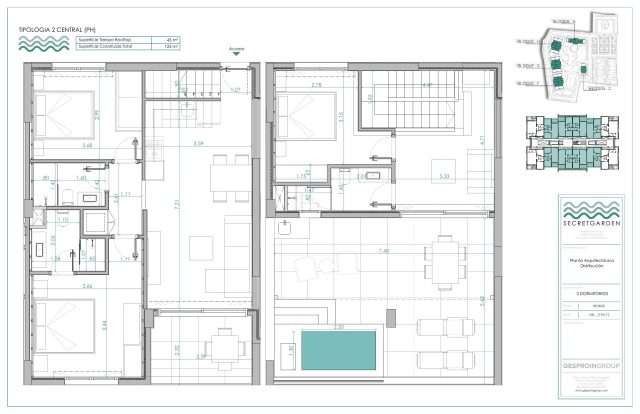
Secret Garden is a gated community of 327 residences on a ~12.4-acre site in Los Corales, inside the Verón-Punta Cana district. Bávaro Beach is about 1,476 feet away, a 5-minute walk, which places the property well behind the public shoreline strip rather than on it, and Punta Cana International Airport is a 15-minute drive. Delivery is scheduled for mid-2027, with residences from $233,000.
Because the homes are not yet built, the questions in the table are live ones: today their answers exist as documents rather than as years of experience. Ask for them, have your attorney read them, and hold each answer up against the delivery date.
Common questions
- Is Bávaro its own municipality?
- No. Bávaro, including Los Corales, is part of the Distrito Municipal Verón-Punta Cana, within the municipality of Higüey. A bill to make the district a municipality expired in Congress, and deputies reopened the discussion in September 2026. Ownership is recorded at the national registry, so a change of municipal status would not affect a title.
- Who supplies electricity to homes in Bávaro?
- CEPM, a private utility created in 1992 that generates, distributes and sells power across a concession area that includes Punta Cana, Bávaro and Verón. A supply contract can be requested online or at its Bávaro commercial office.
- Is there public mains water in Bávaro?
- Not in any structured form yet, by INAPA's own description: the district relies on private wells, water trucks and cisterns. A US$400 million public water, sewer and reuse programme is out to tender, with proposals due on 12 October 2026. Ask any development how it sources and treats its water.
- Who approves new construction in Bávaro?
- Since January 2026 the Verón-Punta Cana district manages and authorises land use within its own territory under Ley 368-22, beginning with a land-use consultation before plans are submitted and fees paid. An environmental authorisation from the Ministry of Environment applies on top.
Want the details for your own situation?
Ask about availability, layouts or the buying process, and someone from the sales team will get back to you.
Get in touch